
 Eric Sherman

From Market Data to Decommissioning Decisions: Helping Operators Navigate a Changing Global Supply Chain
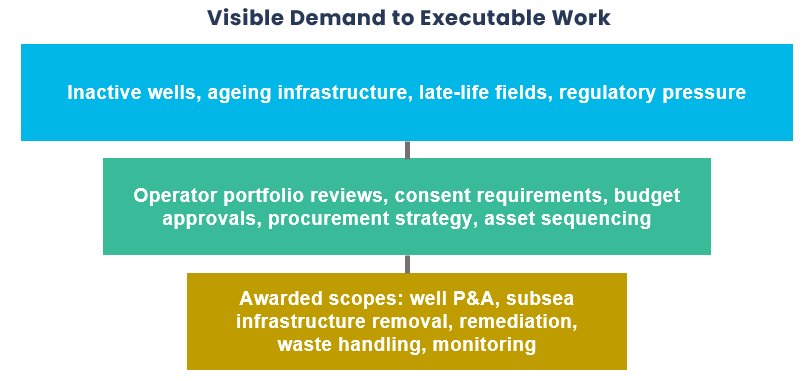
Offshore decommissioning is becoming an increasingly important part of the global energy market.
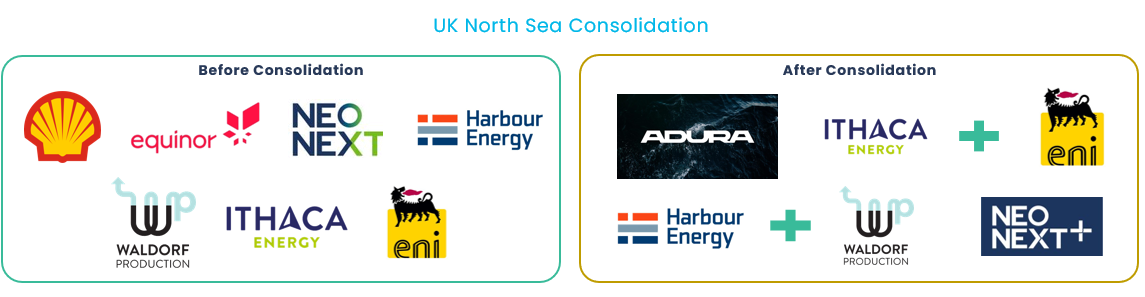
Operators are managing ageing infrastructure, inactive wells and maturing offshore portfolios while responding to regulatory requirements, uncertain project schedules, supply-chain constraints and competition for specialist vessels and equipment. At the same time, consolidation among operators and contractors is changing how work is packaged, procured and delivered.
Making informed decisions in this environment requires more than a list of future projects. Operators need to understand how vessel availability, contractor strategy, regional demand, technology adoption and regulatory developments interact.
Energy Maritime Associates' tailored Decommissioning Market Report brings these factors together to provide a clearer view of the market and support better-informed decisions around project timing, procurement, contracting and delivery.
Understanding the Vessel Market
Vessel availability and pricing are among the most important variables affecting subsea decommissioning costs and schedules.
Our report tracks rates across key vessel categories, including construction support vessels, diving support vessels and ROV support vessels. Rather than considering dayrates in isolation, we assess the factors influencing them, including utilisation, vessel specifications, regional demand and relocations, project commitments and contracting activity.
By tracking these movements, operators can better understand:
- Whether suitable vessels are likely to be available during a planned campaign window
- How early the supply chain should be engaged.
- Whether schedule flexibility could improve access to capacity.
- Where competition for specialist vessels may increase.
This moves the discussion to: “What capacity is realistically available for our project, and under what contracting conditions?”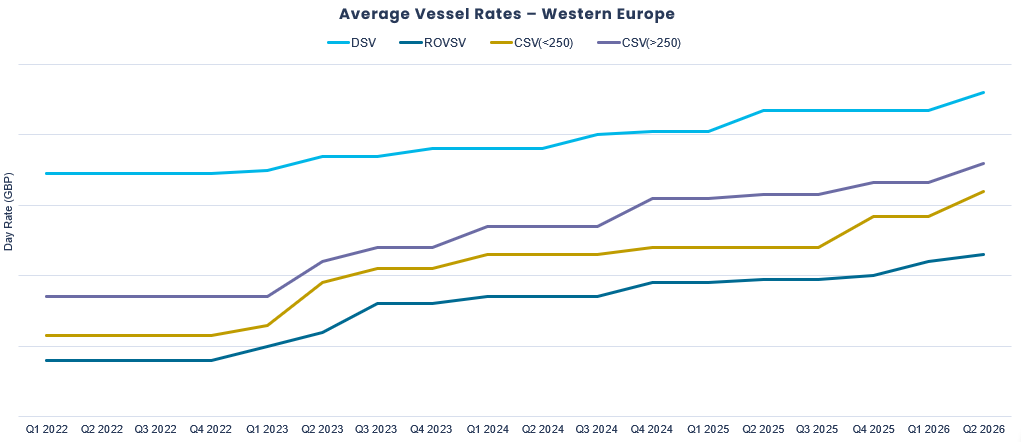
Comparing Vessel Capability, Not Just Capacity
Not every vessel is suitable for every decommissioning scope.
Our fleet analysis reviews vessels by manager, type and technical specification. Coverage of CSV, DSV and ROVSV fleets allows operators to compare factors such as crane capacity, deck space, accommodation, dynamic positioning capability, and operational track record.
Understanding the available fleet can help operators identify where scopes could be separated, combined or delivered through alternative vessel strategies.
Looking Behind the Vessel at the Contractor
A vessel’s specifications are only one part of the commercial picture. The strategy and financial position of the company controlling it can be equally important.
Our Vessel Manager Fleet Reviews examine:
- Corporate strategy and recent company developments.
- Fleet composition and vessel specifications.
- Current and expected vessel availability.
- Vessel utilisation and recent project activity.
- Capital expenditure and fleet investment.
- Experience and strategic interest in decommissioning.
For operators, this intelligence supports a more informed assessment of potential suppliers. It can help identify contractors with the appropriate technical capability, available capacity and strategic appetite for a particular type of work.
Interpreting the Contracting Landscape
The decommissioning market is shaped not only by the volume of work, but also by how that work is brought to market.
Our report assesses contracting and supply-chain trends, including market consolidation, commercial models, vessel availability, contractor confidence and changing approaches to project packaging.
Our analysis considers how different contracting approaches may address these challenges, including:
- Multi-asset and multi-year frameworks.
- Campaign-based contracting.
- Bundled subsea and well decommissioning scopes.
- Collaborative or programme-based delivery models.
- Vessel-sharing arrangements between operators.
- Integrated contracts combining engineering, offshore execution and disposal.
The objective is not to recommend one model for every project. It is to help operators understand how the market may respond to different packages and where changes to timing, scale or risk allocation could improve competition and project certainty.
Monitoring Regulatory and Supply-Chain Risk
Regulatory expectations surrounding inactive wells, ageing assets and delayed decommissioning activity differ considerably between regions.
Our report tracks relevant policy and regulatory developments and considers their implications for project pipelines and supply-chain demand. An increase in wells moving towards permanent abandonment can affect demand for rigs, intervention systems, vessels, engineering personnel and specialist tooling.
Early awareness of these trends supports more realistic scheduling and reduces the risk of approaching the market after the most suitable capacity has already been committed.
Assessing Where Technology Can Deliver Value
Technology is increasingly influencing how decommissioning work is surveyed, planned and executed.
Our report covers a broad range of developments, including advances in subsea tooling, well abandonment techniques, lifting and cutting systems, digital data management, inspection methods, remote operations and autonomous systems.
We assess not only what these technologies can do, but where they are most likely to deliver practical and commercial value.
Connecting Decommissioning with Global Offshore Demand
Decommissioning demand cannot be assessed in isolation from the wider offshore energy market.
Subsea vessels, rigs, contractors and specialist equipment operate internationally. Demand from offshore field development, inspection and maintenance, offshore wind and other marine sectors can compete with decommissioning projects for infinite resources.
This provides context for potential changes in vessel rates and availability and helps explain why local market conditions may tighten even where the regional decommissioning pipeline appears relatively stable.
Applying a Regional Decommissioning Lens
While many decommissioning challenges are shared globally, each region requires a different analytical approach. Regulation, asset maturity, local-content requirements, vessel availability and contractor capability can vary significantly.
A global report can therefore combine consistent market indicators with dedicated regional analysis focusing on differing infrastructure and decommissioning segments. For example and purely to illustrate some regional variance:
North Sea
Coverage could focus on mature decommissioning pipelines, inactive wells, vessel availability, contractor capacity, operator consolidation and collaborative or programme-based contracting models.
Middle East
Analysis could assess ageing offshore assets, future abandonment requirements, national oil company strategies, local-content requirements and opportunities to combine decommissioning with brownfield or asset-life-extension programmes.
Asia
Analysis could map mature fields, suspended wells, floating production units, liability transfers, regulatory developments and the logistical implications of mobilising specialist vessels and equipment.
Turning Intelligence into Action
Our tailored Decommissioning Market Report supports commercial, procurement, project and strategy teams by helping:
- Benchmark vessel rates and technical capabilities.
- Identify potential capacity constraints.
- Compare contractors and vessel managers.
- Evaluate alternative contracting models.
- Monitor regulatory and supply-chain risks.
- Assess emerging technologies.
- Compare regional decommissioning opportunities.
By combining vessel data, contractor intelligence, policy developments, technology analysis and regional market trends, we turn a complex global decommissioning landscape into practical intelligence that supports confident decision-making.
Please contact us to schedule a meeting to discuss the report and how we can answer your questions.
📩 Eric Sherman at eric.sherman@energymaritimeassociates.com
- DOWNLOAD THE UK DECOM - SAMPLE REPORT -